Hunger has context
Timing, meal structure, sleep, and stress can change how demanding hunger feels.
WEIGHT AFTER 50
Understand the patterns behind hunger, cravings, sleep, stress, and environment—then build a weight-management system you can keep using in real life.
See which behavioral pattern most often disrupts your plan: sleep-linked, stress-linked, environment-driven, irregular-meal, or automatic-habit.

WHO IT IS FOR
For adults 50+ who are tired of all-or-nothing cycles, notice changes in appetite or evening eating, or see a connection between weight, sleep, and stress.

THE REAL PROBLEM
After 50, another list of restrictions rarely solves the whole problem. Appetite, sleep, stress, muscle, habits, and food environment interact. The program begins with observation and one useful behavioral lever—not punishment.
Timing, meal structure, sleep, and stress can change how demanding hunger feels.
What is visible, available, and easy often decides the next action first.
A better evening and morning rhythm can make healthy decisions easier to repeat.
THE LONGEVITY120 METHOD
Map your pattern, choose one useful lever, use three clear daily actions, and build a calm return after missed days.
Notice when hunger, cravings, fatigue, and stress disrupt your plan.
Start with meal structure, environment, sleep, movement, or coping.
Get three actions that fit your time and current program stage.
Use a smaller next step and a maintenance plan after disruption.

BUILT FOR ORDINARY DAYS
A powerful system does not demand perfect motivation. It reduces friction, offers a minimum version, and makes the return visible when life interrupts the plan.
A strict start is not the same as a sustainable plan.
More awareness and control in everyday decisions, more consistent routines, and a personal plan for healthy weight management.
TODAY’S 3
Your daily plan connects appetite, movement, recovery, and behavioral skills without turning life into a full-time project.
Use a simple framework and plan the easiest food decision first.
Choose a realistic movement window that supports your wider plan.
Name the trigger, use one coping skill, then decide what fits.
INSIDE THE PROGRAM
Short education, practical actions, personal records, and a clear return protocol—organized inside one program.
Designed as a practical, low-friction part of your personalized wellness path.
Designed as a practical, low-friction part of your personalized wellness path.
Designed as a practical, low-friction part of your personalized wellness path.
Designed as a practical, low-friction part of your personalized wellness path.
Designed as a practical, low-friction part of your personalized wellness path.
Designed as a practical, low-friction part of your personalized wellness path.
YOUR PROGRAM PATH
The program builds progressively, then turns what worked into a personal maintenance system.
Build a clear baseline and identify the most useful starting point.
Turn the theme into one practical routine that fits ordinary days.
Turn the theme into one practical routine that fits ordinary days.
Practice a shorter path from overload to a deliberate next action.
Practice a shorter path from overload to a deliberate next action.
Add a realistic capability-focused practice at your level.
Choose what to keep, define the minimum version, and build the return protocol.
Choose what to keep, define the minimum version, and build the return protocol.

PERSONAL STARTING POINT
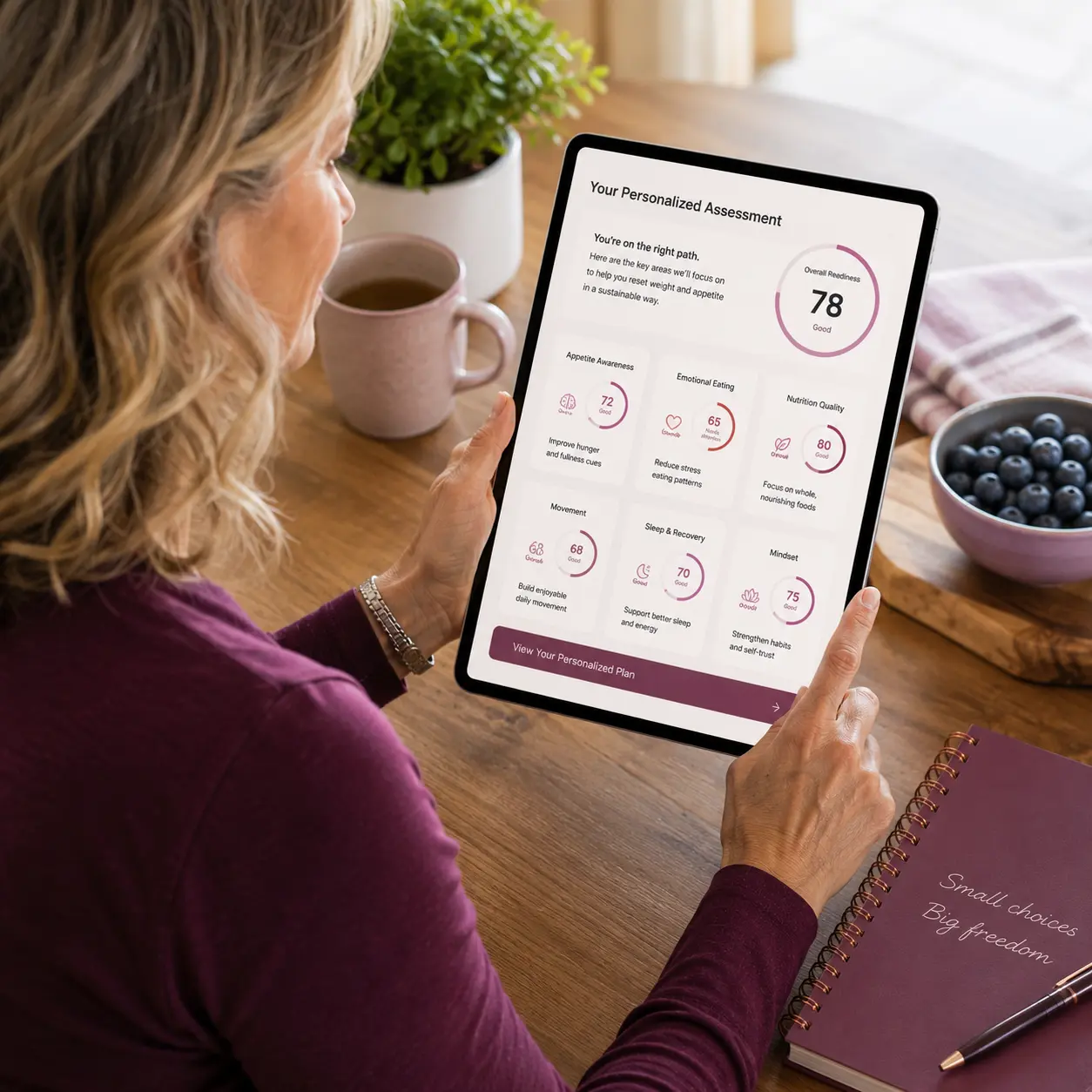
See which behavioral pattern most often disrupts your plan: sleep-linked, stress-linked, environment-driven, irregular-meal, or automatic-habit.
You receive one primary focus, one minimum action, and a recommended starting module.
WHAT THE PROGRAM SUPPORTS
More awareness and control in everyday decisions, more consistent routines, and a personal plan for healthy weight management. Results vary; the program measures actions, routines, and self-recorded patterns.
Understand the situations that most often alter appetite and decisions.
Build actions that survive imperfect weeks.
Replace shame and restart cycles with a defined next step.
Know what to keep and how to recover after disruption.
The program does not treat obesity, guarantee weight loss, prescribe a therapeutic diet, or change medication.
ONE CONNECTED PLATFORM
Add a supporting program when it solves a real barrier—without managing your health in separate apps.

FOUNDER & PROGRAM ARCHITECT
Igor Tsalenchuk, PhD, is a clinical psychologist, endocrinologist, healthy-longevity educator, and founder of Longevity120.ai.
Lasting change depends less on knowing more and more on making the next useful action clear enough to repeat.
QUESTIONS, ANSWERED
Clear expectations are part of a trustworthy wellness product.
The program may support mindful tracking, but it is not built around mandatory lifelong counting. The focus is patterns, structure, and realistic actions.
A lifestyle companion can support routines, nourishment, movement, and strength when medication has been prescribed by a clinician. The app does not select a medication or change a dose.
The app shows behavior and consistency; it does not promise a specific outcome. Medical causes and treatment belong in a conversation with a licensed professional.
No. It is a behavior-change and healthy-routine program, not a therapeutic diet.
The product is designed to let users emphasize appetite, strength, routines, or well-being.
You keep a personal maintenance plan, a return protocol, and access to the wider Longevity120 system.
YOUR NEXT STEP
Take the Appetite Pattern Check and begin with one useful change you can repeat this week.